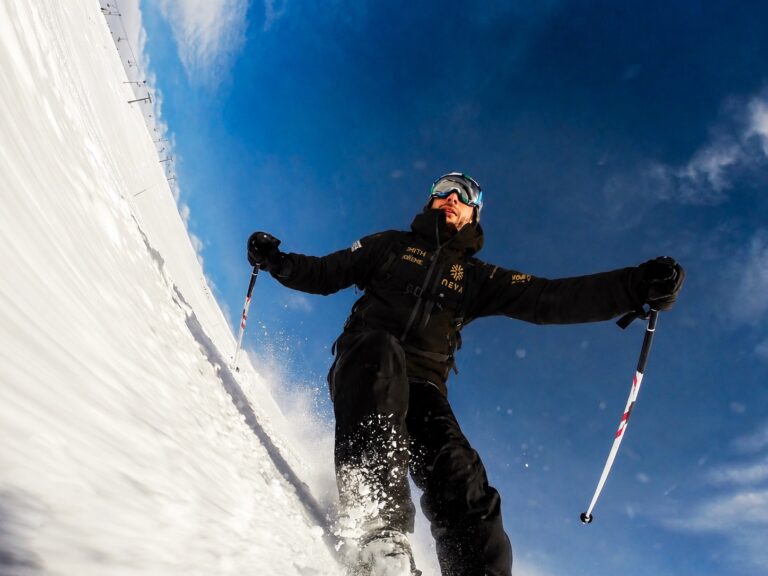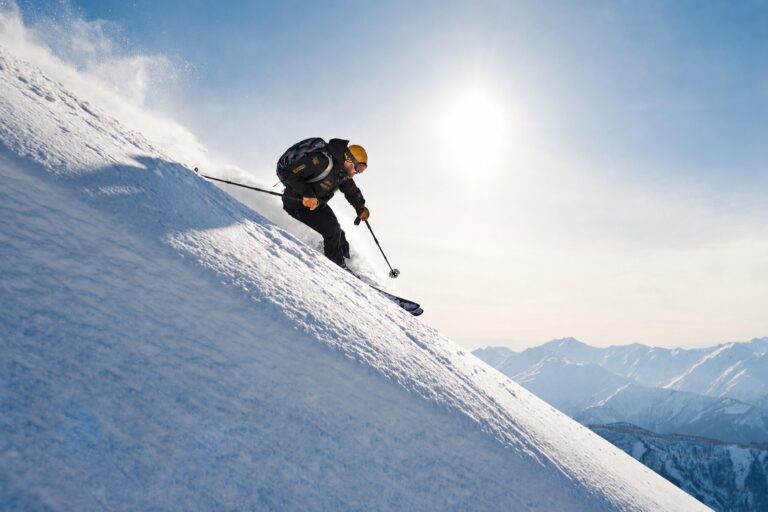
Feeling the edges bite into the snow, tracing precise arcs at speed: carving is the art of technical skiing. Our instructors give you the keys to ski with precision and pleasure on every run.


The discipline
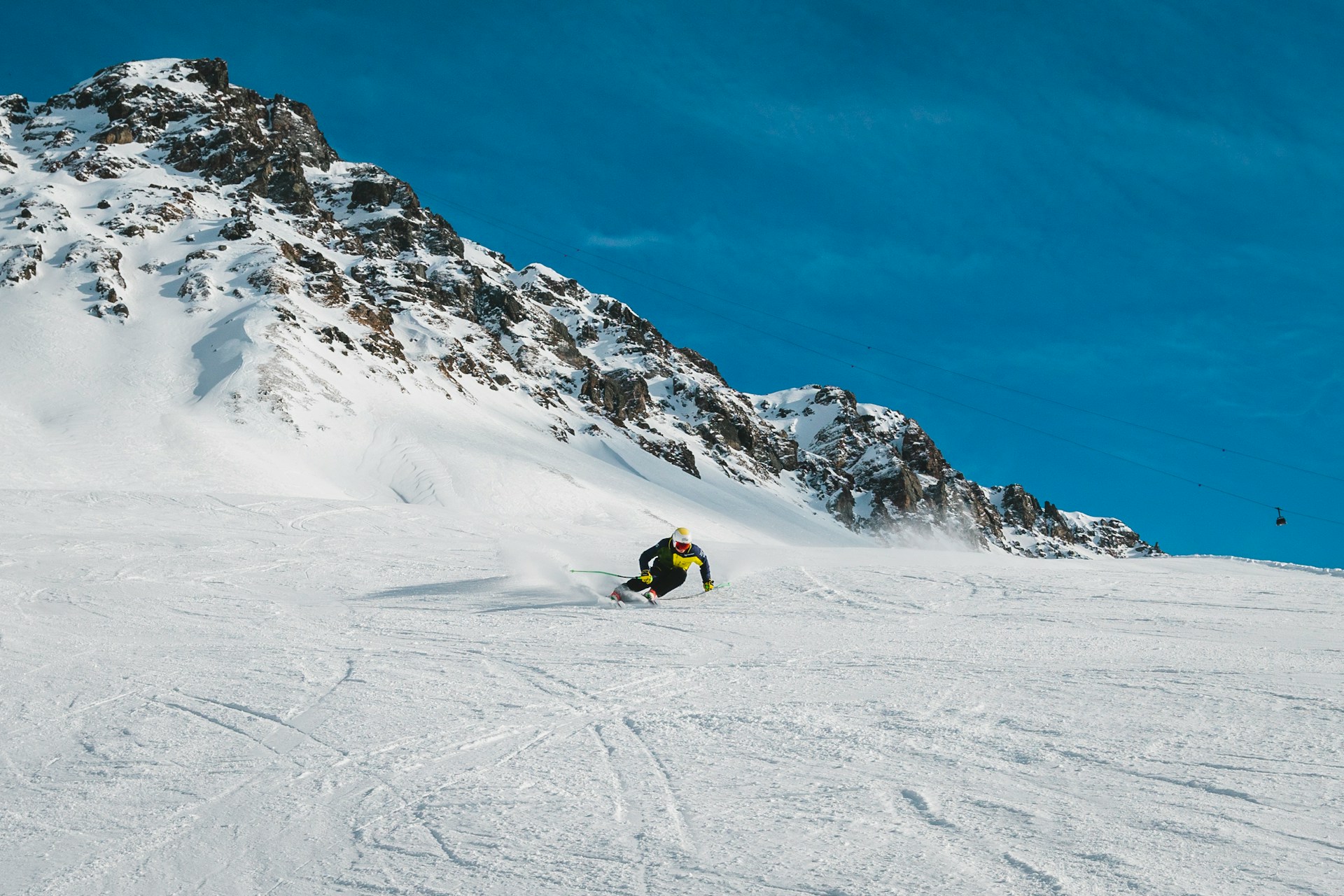
Carving is a ski technique that consists in setting your skis on their edges rather than skidding through turns. The ski stays on its edge through the whole curve, drawing a clean arc into the snow as if traced with a compass. This technique requires real understanding of pressure, good posture, and a sense of timing. It allows you to ski faster, more precisely, and more efficiently, fully exploiting the potential of modern parabolic skis.
Intermediate skiers who want to discover the technique
Confident skiers who want to refine their precision
Full mastery, with rhythm and radius variation
Neva is a partner of Carv in France, the leading connected ski coach. We provide you with Carv sensors and dedicated access so you can enjoy the experience during your carving lesson.
How it works
The sensors clip onto your boots and analyse every turn in real time: balance, edge grip, angle, and weight transfer. Whilst you’re skiing, audio coaching guides you to adjust your weight distribution for the very next run. At the end of the lesson, you’ll leave with a precise assessment of your level and clear areas for improvement, to follow session by session.
The pursuit of performance in carving is more physically demanding than skidding turns.
Why choose Neva
Carv provides the data, our instructors provide the technique. That’s the whole point of this partnership: combining precise measurement with the expertise and teaching skills of a qualified instructor, so you can progress faster and finally understand what makes a beautiful carved turn.
Carv sensors are also available for purchase at the Neva shop. Contact us to find out which models are available and to place an order.
Book your carving lesson in Val d’Isère and move from skidded turns to carved arcs, on the finest pistes of the Espace Killy.
Discover more
Carving refers to a skiing technique that involves making carved turns, i.e. by placing the skis entirely on their edges without skidding. The ski remains in constant contact with the snow via its inner or outer edge, producing a perfect arc in the snow rather than a skidded track. It is the go-to technique for skiing fast, cleanly and with maximum control.
In a classic turn, the skier slides along part of their path to control their speed and direction. The track left in the snow is therefore wider and less precise. In carving, the ski remains on its edge and the track is clean and straight, as if drawn with a plumb line. Carving requires a more precise technique but offers greater stability at high speeds and greater energy efficiency.
Yes, carving is intended for skiers who already master parallel turns on blue to red slopes. Without these foundations, learning carving is less effective and can even slow down progression.
Modern parabolic skis are designed for carving. They have an hourglass shape (narrow in the middle, wide at the tips), which gives them a natural turning radius when you edge them. For precise carving, sleek piste skis (60 to 70 mm at the waist) are preferable to wide all-round skis. Our shop stocks all types of equipment.
The time needed to learn carving depends on each skier, their starting level and their ability to develop new sensations. Sometimes, everything can click in just 30 minutes: feeling the edge grip, understanding the right pressure, and letting the ski draw its arc. To build solid foundations and gain consistency, several dedicated sessions then allow you to progress step by step.
You can carve on all open slopes. The quality of the experience mainly depends on the snow conditions of the day: carving works best on groomed, firm and sufficiently wide slopes, where the ski can grip the edge and draw its line. Soft, bumpy or very narrow slopes limit the effectiveness of the technique. In Val d’Isère, the blue to red slopes in the Bellevarde and Solaise areas are ideal early in the day, when the grooming is still fresh.
Simply download the Carv app. We’ll provide you with a code and sensors that allow you to track your progress and measure your performance. Carv features a global leaderboard where you can see how you compare to other skiers.
On the contrary, a well-executed carving turn is less tiring, because the ski does the work for you. There’s no need to push with your legs to make the ski turn; it’s the edge that controls the direction. At the same skill level, a carver can ski all day without any aches and pains, whereas a skier using the skid technique will quickly feel muscle fatigue. That said, learning the basics requires concentration and can seem demanding in the early days.