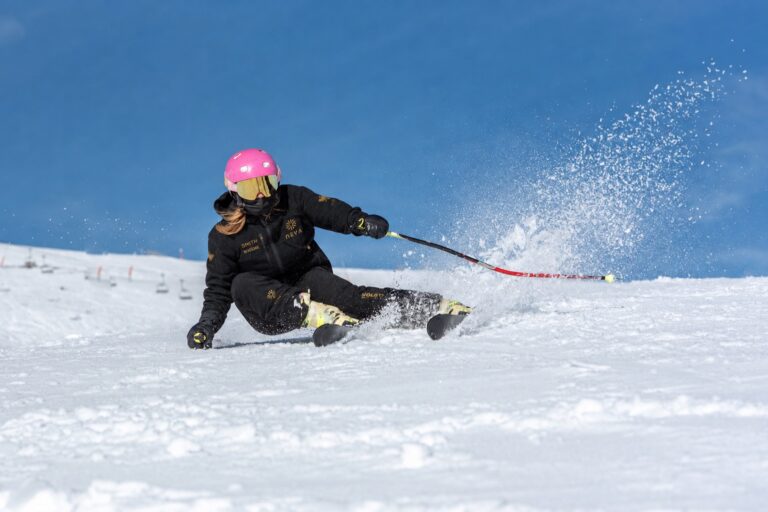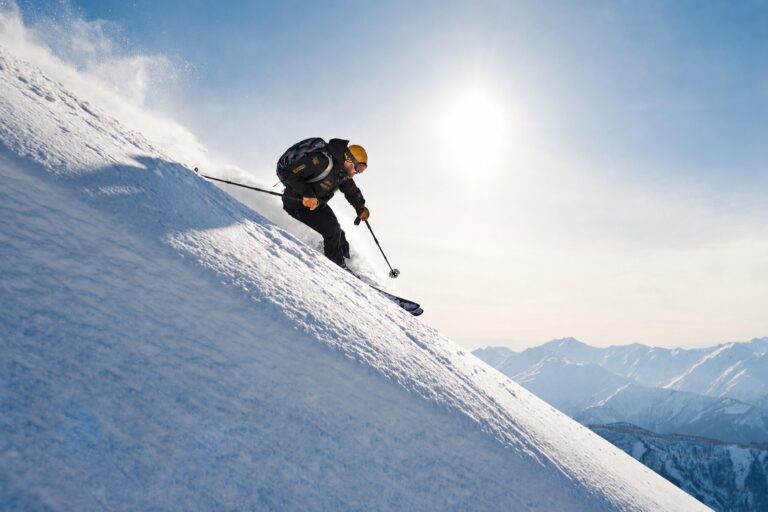
Alpine skiing is where it all begins. From your first sensations on a green run to the most demanding descents of the Espace Killy, our instructors guide you at every stage, at your own pace.


The discipline
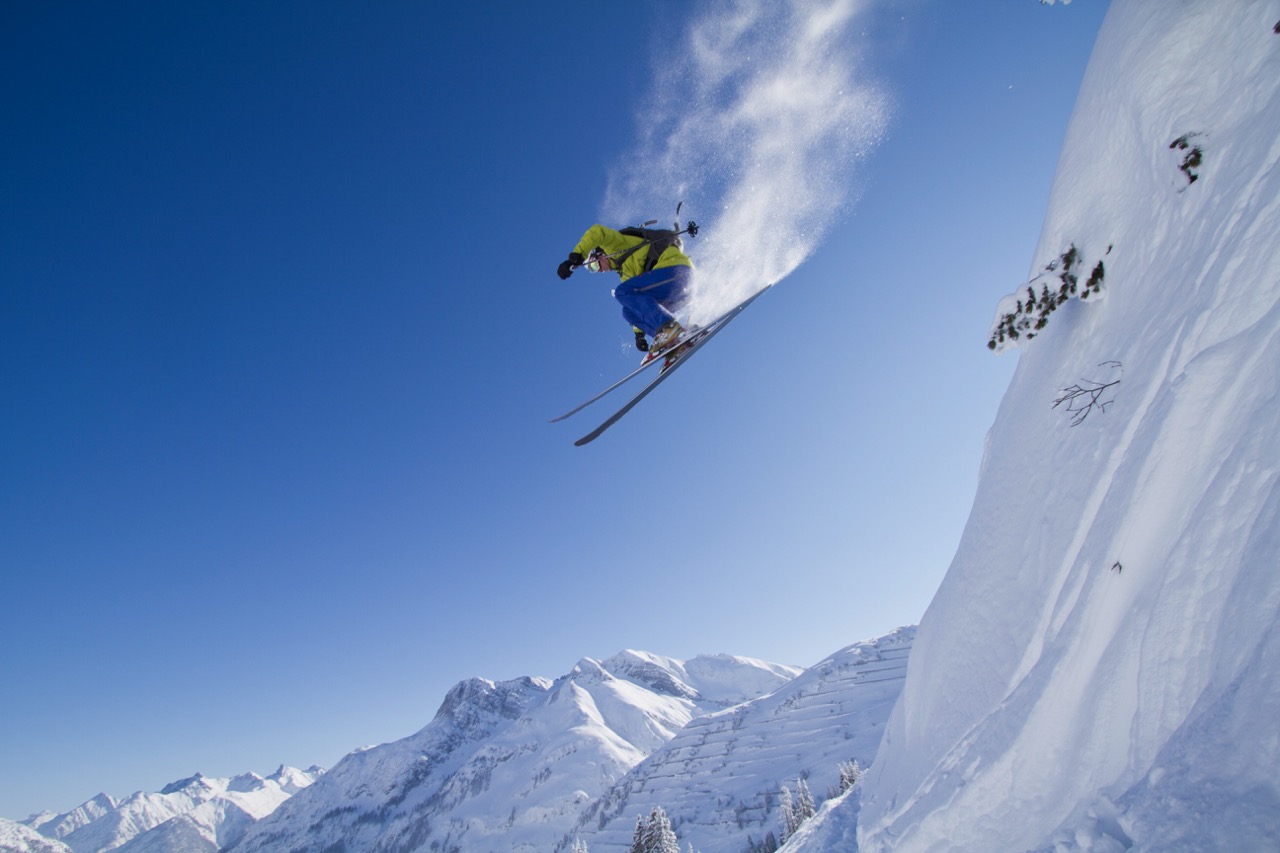
Alpine skiing is the most widely practised discipline in ski resorts, ideal both for discovering the basics and for refining your technique. Our instructors guide you at your own pace, on pistes suited to your level and your goals.
First sensations, green runs
Confident turns, blue and red runs
Red and black runs, technical refinement
All terrains, all conditions
Book your alpine skiing lesson and make the most of the pistes of Val d’Isère.
Discover more
Alpine skiing is the discipline that consists in descending groomed pistes using two skis attached to your feet with rigid boots. It’s practised in resorts with the help of ski lifts to gain altitude, unlike cross-country skiing or ski touring, which require effort to climb. It’s the most widely practised form of snow sport in the world, and the one that’s quickest to discover.
Alpine skiing and snowboarding are both practised on groomed pistes with ski lifts, but snowboarding uses a single board instead of two skis. Cross-country skiing is practised on flat or rolling terrain, without ski lifts, with much lighter equipment. Ski touring climbs slopes under your own power (with climbing skins under the skis) before descending in alpine ski mode. Each discipline has its own terrain, equipment, and pace.
Slope colours indicate the level of difficulty, but they do not tell the whole story: gradient, width, snow conditions, traffic and weather can all change how a run feels. Green slopes are the easiest and are ideal for discovering skiing gently. Blue slopes help you progress, link turns and build confidence. Red slopes are designed for skiers who are already comfortable, with steeper gradients and turns that require more control. Black slopes are for experienced skiers, able to handle steep terrain, moguls or more physically demanding conditions. In Val d’Isère, the variety of the ski area makes it possible to progress step by step, from your first turns to the most technical runs.
Four main levels stand out. Beginners have never skied or don’t yet master braking. Early intermediates ski in snowplough and start linking turns. Intermediates link parallel turns on blue to red runs. Advanced skiers descend all red runs and some black runs with ease. Experts master all terrains, including off-piste, and play with the slope rather than enduring it. Our NEVA progression follows this logic in 9 stages.
Val d’Isère is famous for the quality and diversity of its ski area. The resort offers an exceptional playground for progression, with varied slopes, reliable snow conditions and many opportunities beyond the marked runs. It is also a reference destination for off-piste skiing, as the area offers terrain suited to different levels: guided first experiences, accessible routes to build confidence, and more committed lines for experienced skiers. This diversity allows every skier to discover the mountain at their own pace, with the right level of guidance.
Several reasons. Its high altitude guarantees quality snow from late November to early May. Its domain, the Espace Killy (linked with Tignes), offers nearly 300 km of pistes for all levels. Its history makes it a cradle of French skiing, with Jean-Claude Killy who built his legend there. And every winter, the resort hosts a stage of the Alpine Skiing World Cup, attracting the world’s best skiers.
For first ski lessons in Val d’Isère, you do not always need a full ski area pass. Beginners can start with the Pim Pam Poum beginner pass, which gives access to the Solaise learning area and slopes suited to first turns. Depending on your level and progress, your instructor can then advise you on whether to move to a wider ski pass. The goal is to choose a pass that matches your actual skiing level, without paying from the start for areas you may not use during your first lessons.