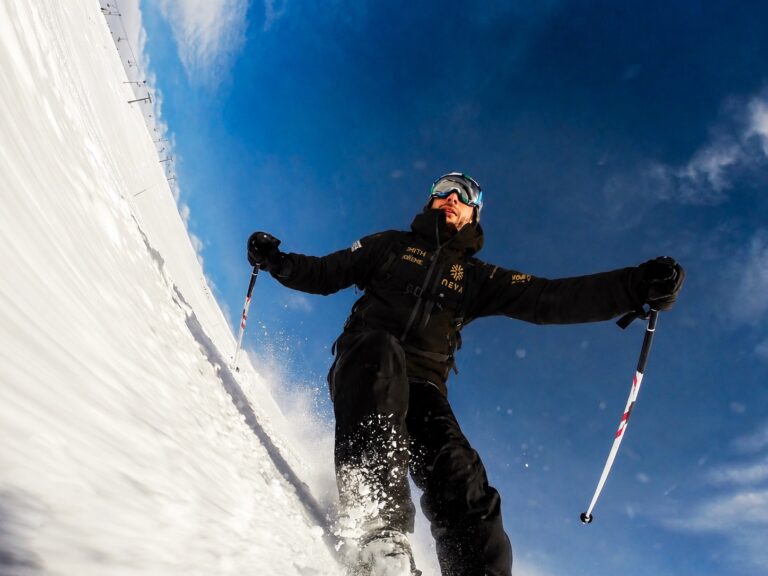
Snowboarding is a different way to read the mountain. From your first carved turns on a blue run to the snowpark and freeride, our instructors guide you with passion, at your own pace. Snowboarding quickly rewards perseverance.


The discipline
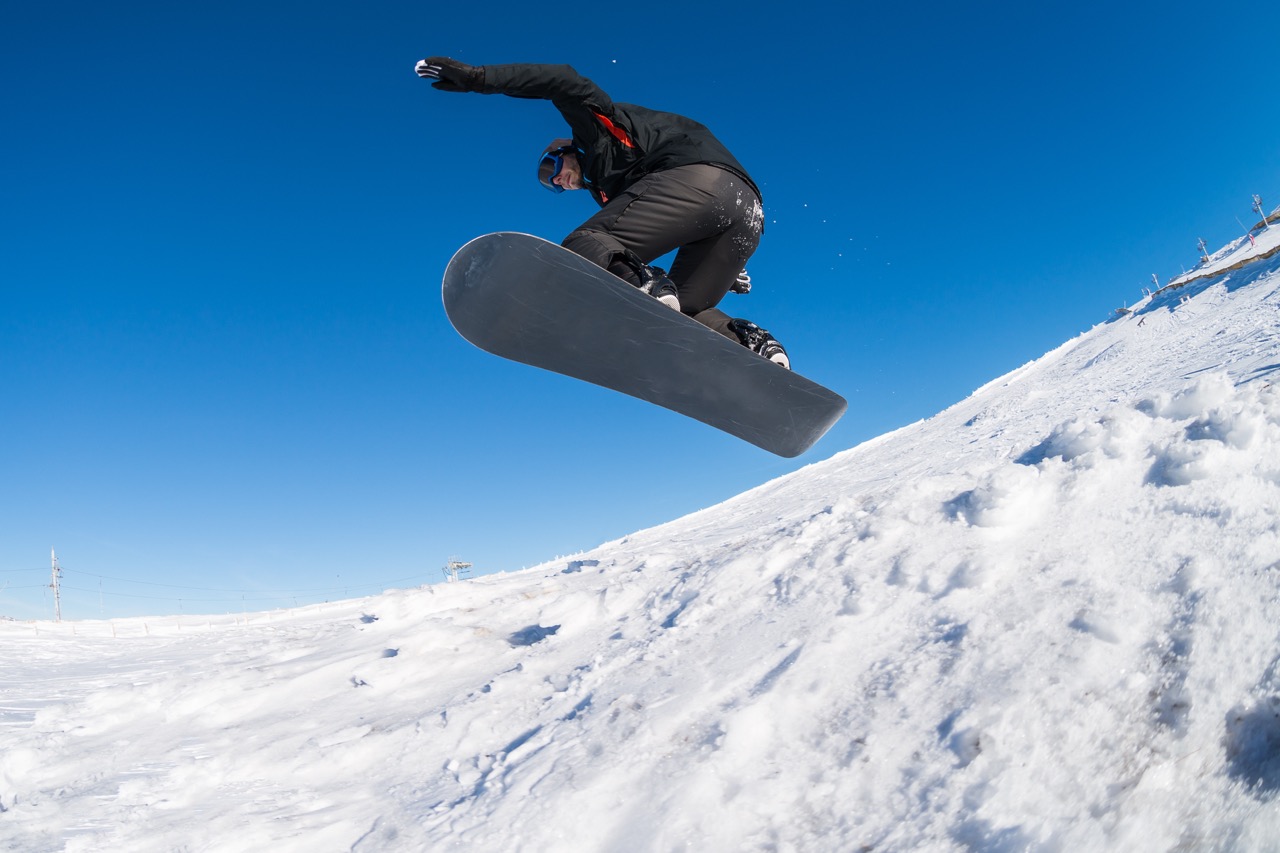
Snowboarding is the art of descending the mountain on a single board, standing sideways. Born in the 1980s in the United States, it has won over resorts worldwide thanks to its smooth feel, its sensations, and its culture. More accessible than people think, it allows fast progression after a sometimes tricky first day.
First steps on the board, green and blue runs
Confident front side and back side turns, exploring the ski area
Snowpark, moguls, varied snow
Freeride, off-piste, all-terrain
Book your snowboard lesson in Val d’Isère and discover the mountain from a new perspective, with our specialised instructors.
Discover more
Snowboarding is a sliding discipline that consists in descending the mountain on a single board, fixed to both feet by soft or semi-stiff bindings. You stand upright, sideways to the direction of descent. Born in the 1980s in the United States, halfway between surfing and skateboarding, snowboarding became an Olympic sport in 1998 and continues to evolve across piste, snowpark, freeride, and boardercross.
Three main differences. The single board of snowboarding replaces the two skis of alpine skiing, which radically changes the sensation and the technique. The snowboarder stands sideways, while the skier looks straight ahead. And snowboarding uses soft boots, more comfortable than rigid ski boots. In terms of learning, snowboarding is often harder on the first day but becomes enjoyable quickly, whereas skiing progresses more gradually.
The first day of snowboarding is often more confusing than the first day of skiing, because you’re learning to stand on a single board and manage a new kind of balance. But once the basics are acquired (usually after 1 to 2 days), progression becomes fast. Most beginners are linking their first turns on blue runs by the third session.
We welcome children to snowboarding from the age of 7, the age at which they have the body control needed to manage the board. Before 7, skiing remains better suited to their physical and motor development. For teenagers and adults, there’s no upper age limit: we regularly see beginners starting snowboarding at 40 and finding huge enjoyment in it.
In a week’s worth of lessons, a motivated beginner can usually manage to link together heel-side and toe-side turns on a blue run. Most learners are able to link turns on a blue run more quickly than they can on skis. To reach an advanced level that allows you to explore the whole ski area, you should allow for two to three one-week trips spread over several winters. Snowboarding quickly rewards perseverance.
Four main families. Freecarve or alpine, which favours speed and precision on piste. Freestyle, practised in the snowpark with jumps and tricks. Freeride and off-piste, which explore untouched snow outside the marked pistes. And boardercross, a heat-based race over an obstacle course. Val d’Isère and the Espace Killy offer terrain for all of these disciplines.